Easy Filet Mignon in a Cast Iron Skillet
Cooking filet mignon in a cast iron skillet is easy and produces a perfectly cooked steak.
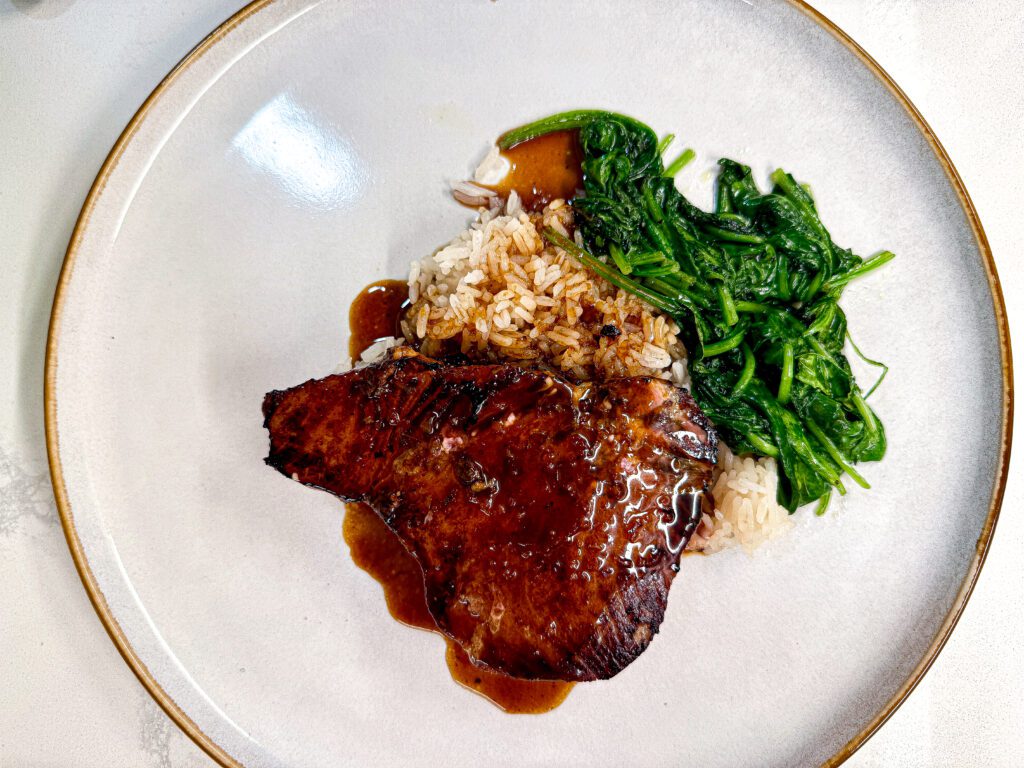
The filet mignon is easy to cook when using a cast iron skillet, a reliable timer and quality thermometers to track internal temperatures.
When it comes to steak, the tender filet mignon is my favorite cut. It comes from the small end of the beef tenderloin and literally means “dainty filet” in French.
Filet Mignon is Expensive
If you’ve ever eaten filet mignon in a restaurant, you know it is an expensive cut of beef. It’s small which means there’s less of it per cow. It’s lean and tender which makes it in high demand. The law of supply and demand makes this an expensive piece of meat.
*Ginger Tip: Buy a full beef tenderloin from the butcher when it is on sale and slice it into steaks. Carefully freeze them and store for up to 12 months.
I remember the first time we cooked them on the grill and the pressure of not messing them up! No one wants to spend that kind of money and overcook them. Over the years, most of our grilled filets were spectacular, but some were not.
Grilled or Pan Seared?
Living in Charleston, we had the luxury of dining in some very fine restaurants. At some point I noticed that most restaurants served filet mignon seared with melted butter drizzled over the crust. No grill marks? Hmmm I wanted to understand this. Is this the secret to the best filet mignon?
Therefore after years of grilling them, we decided to give them a try in the cast iron skillet. My husband gave me a Lodge Cast Iron Skillet for Christmas and it was the perfect time to test it out. In fact, he gave me a set of three different sizes, and I use all of them! They’re the best!
Seasoned Cast Iron
The key to cast iron is keeping the pan seasoned. This means that the pan has a ‘protective layer’ of oil that has been cooked into the iron and has created a non-stick surface. You don’t want to scrub this off or it will ruin it.
Truth be told, my first cast iron skillet was given to me in college and I put it in the dishwasher. Gasp! Yep-I ruined it. It was rusted and just plain awful.

Now I know better (and so do you)- keep it seasoned. I’ll explain this step better after we finish cooking!
Preparing Filet Mignon
If you followed my Ginger Tip and are using frozen filets, take them out of the freezer and put them in the refrigerator the night before you want to cook them.
An hour before you are ready to cook the steaks, put them on a plate on the counter to let them reach room temperature. This will ensure an even cooking process with accurate doneness.
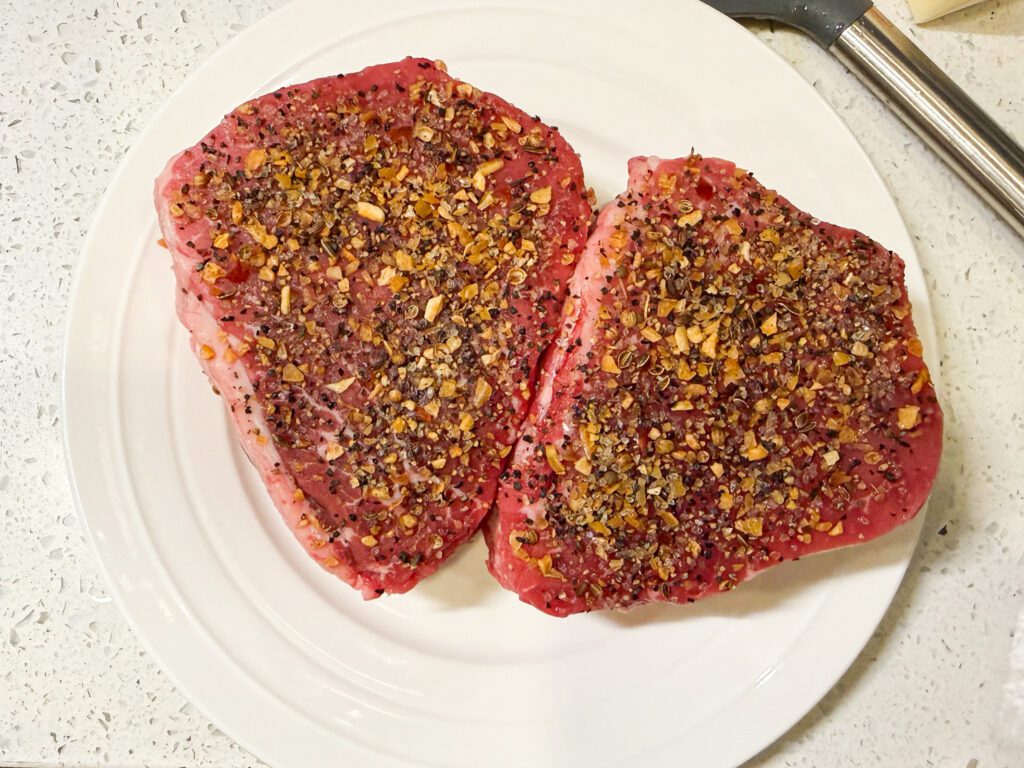
Season them with salt and pepper. I like to use Montreal Steak Seasoning for a flavorful crust. Don’t be shy with the seasoning! Give it a good coating. Alternatively, adjust to your liking and salt intake limitations if necessary. Now is the time to preheat your oven to at least 400°F. You do not want to be done with the stove top searing and waiting for the oven; so get it hot now.
The next part is super important! You want to heat the cast iron skillet over high heat until it is smoking hot-literally it should be smoking. If you do not have a overhead vent, be prepared to open a window and point a fan towards it to direct the smoke outside. I may have set off a few smoke alarms in my time!
Cooking with the 4-4-4 Rule
This rule means we are cooking one side for 4 minutes, cooking the other side for 4 minutes, and then finishing in the oven for 4 minutes. I’ve seen others online suggest 5-5-5 and even 3-3-3 rules; it depends on the thickness of the steak. I’m assuming the filet is about 2 inches thick and we will be cooking it in 4 minute increments. Smaller ones would take less time -so please be flexible.
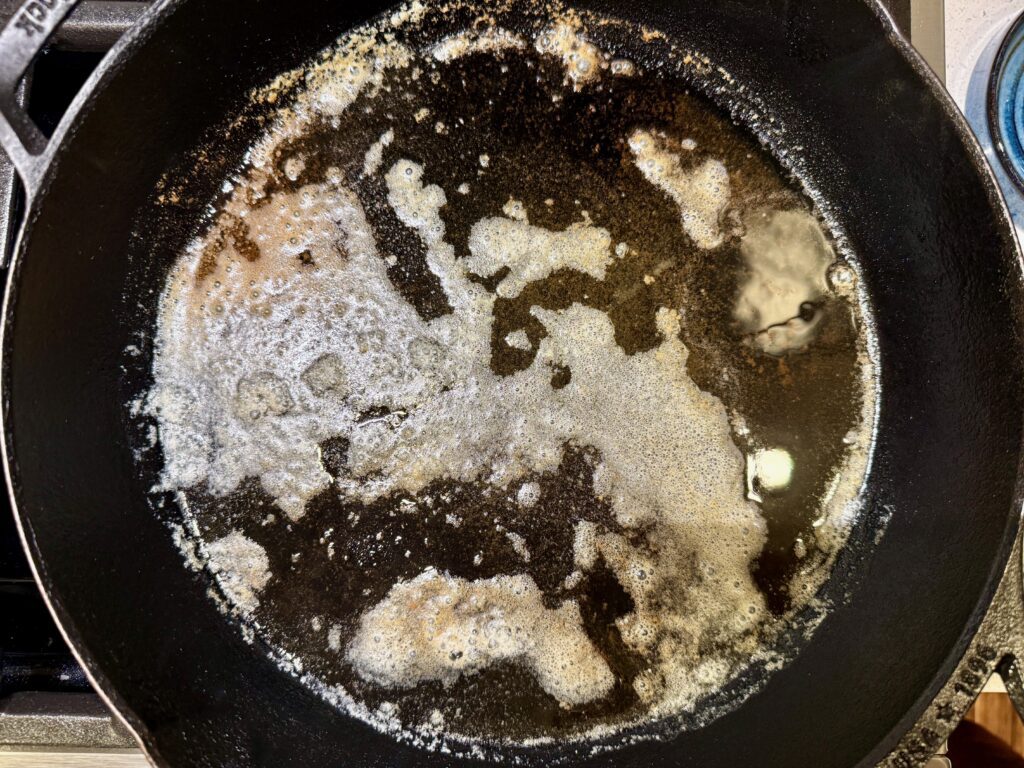
Once the skillet is screaming hot, swirl some olive oil and butter around the pan. The olive oil helps keep the butter from burning, but it will brown.
*Ginger Tip: Use Ghee or clarified butter to maintain a higher smoke point without as much burning bits in the butter.
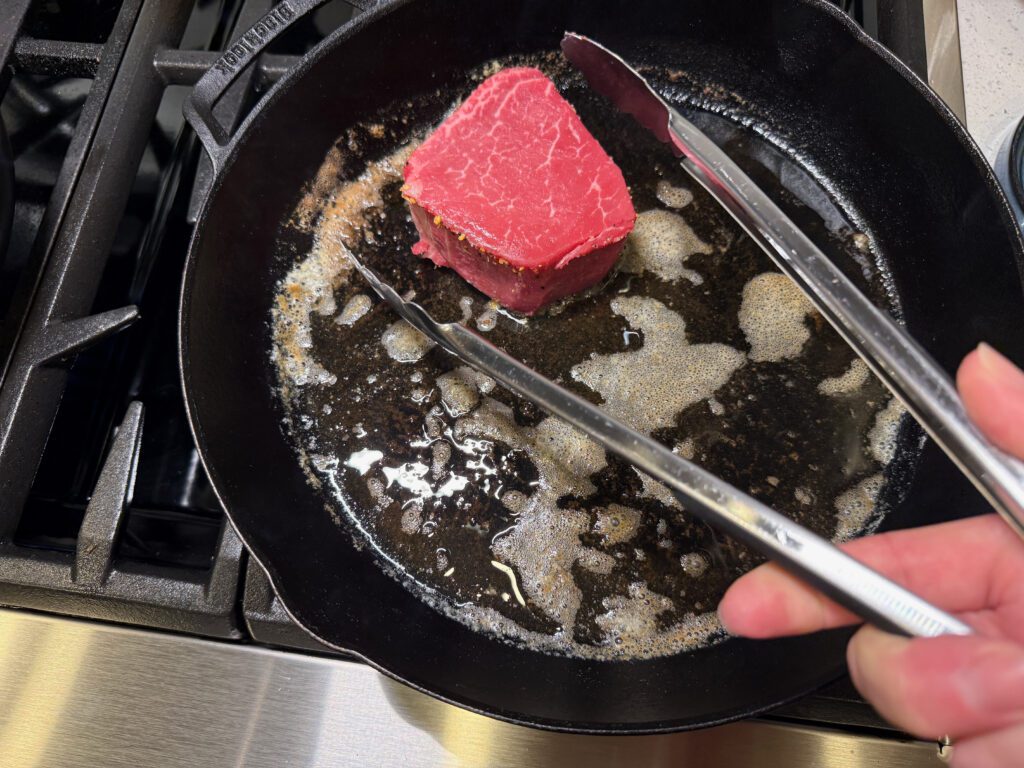
Place the seasoned filet mignon in the cast iron skillet and set a timer for 4 minutes.
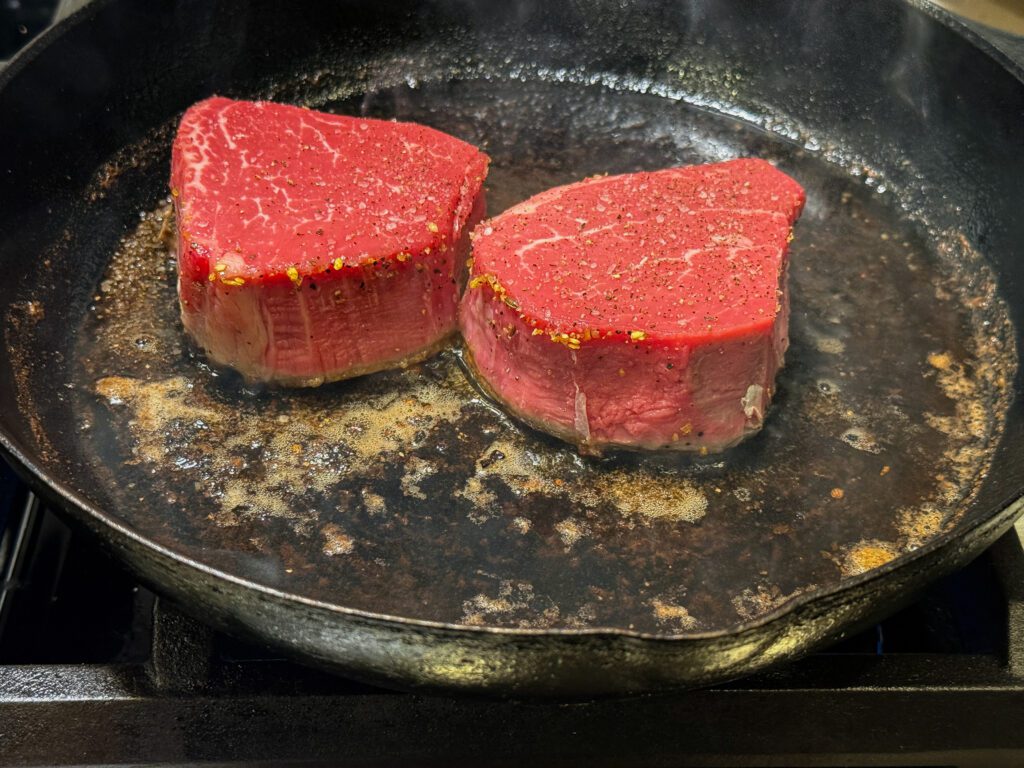
After 4 minutes, flip the steaks and set another 4 minute timer.
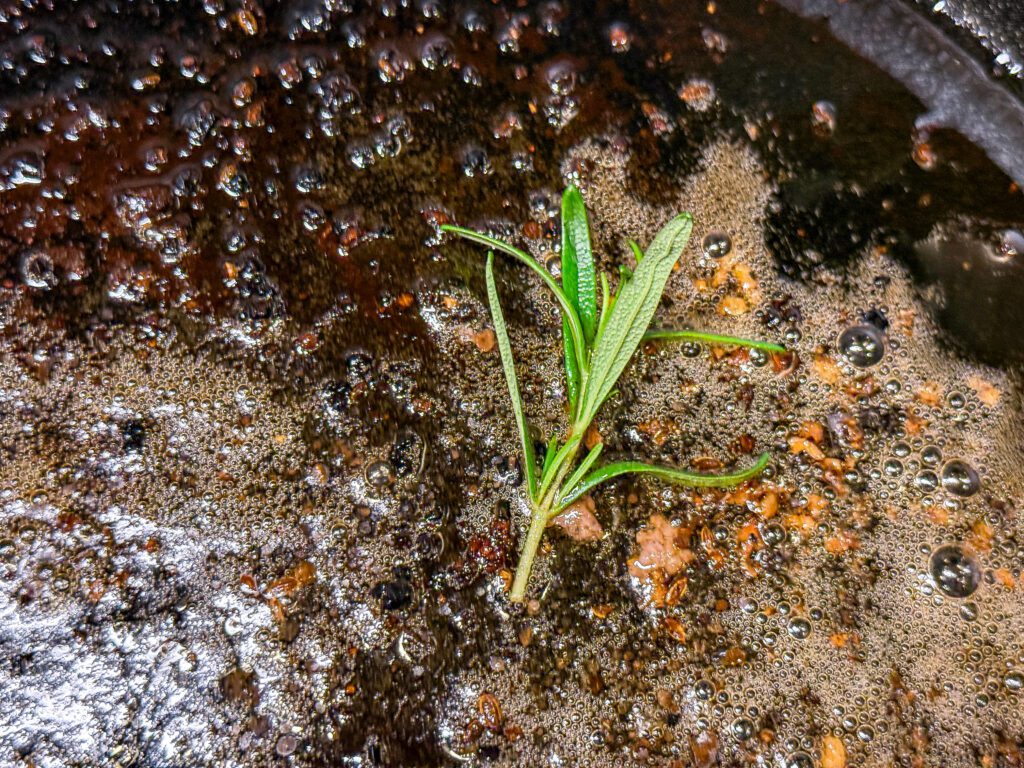
At this point I like to drop in some pats of butter and rosemary sprigs. You know me-if I can use herbs from the kitchen garden, I will! Next, I spoon the melted herb butter over the steaks.
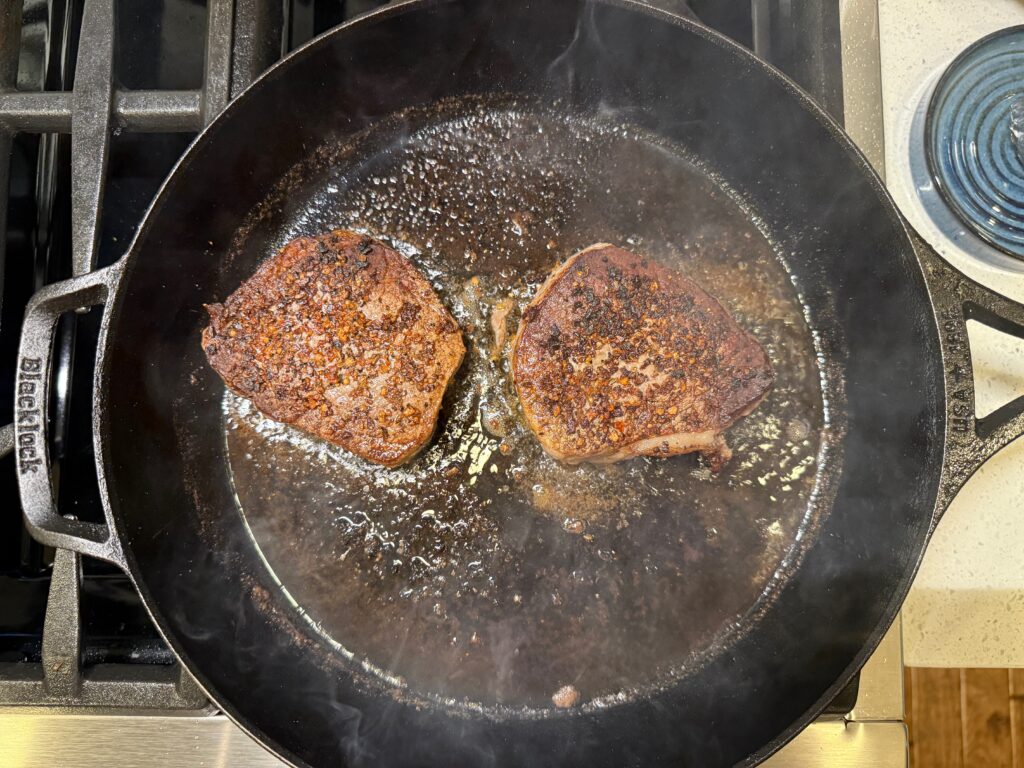
Check the temperature of the steaks with a meat thermometer. It should be around 100°F. I like to use a digital meat thermometer that connects to my smart phone via bluetooth. Insert this into the steak and leave it for now. (If you don’t have a bluetooth thermometer, that’s okay-just check every couple of minutes to see the temps).
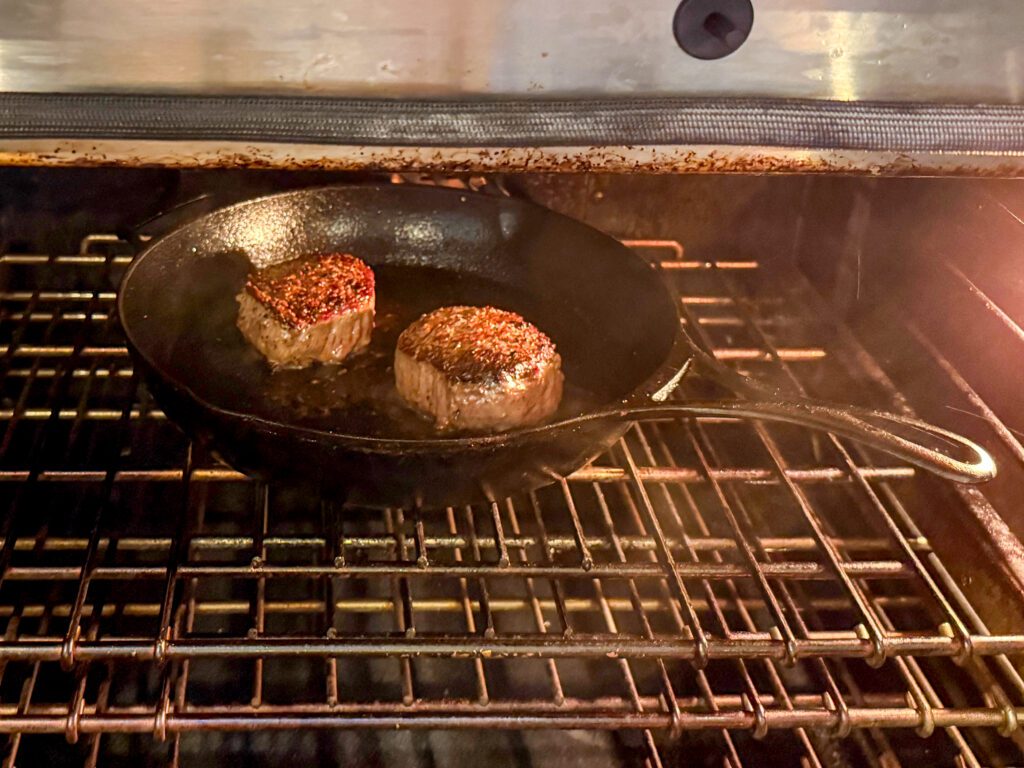
Then turn off the stovetop heat and carefully put the whole skillet in the hot oven for 4 minutes. The skillet handle will be hot! Use oven mitts! I remove the skillet (again-oven mitts!) when the steaks reach 115°F for rare, 120°F for medium rare. Set the skillet back on the stove burner (no heat) and put the steaks on a platter to rest for a few minutes.
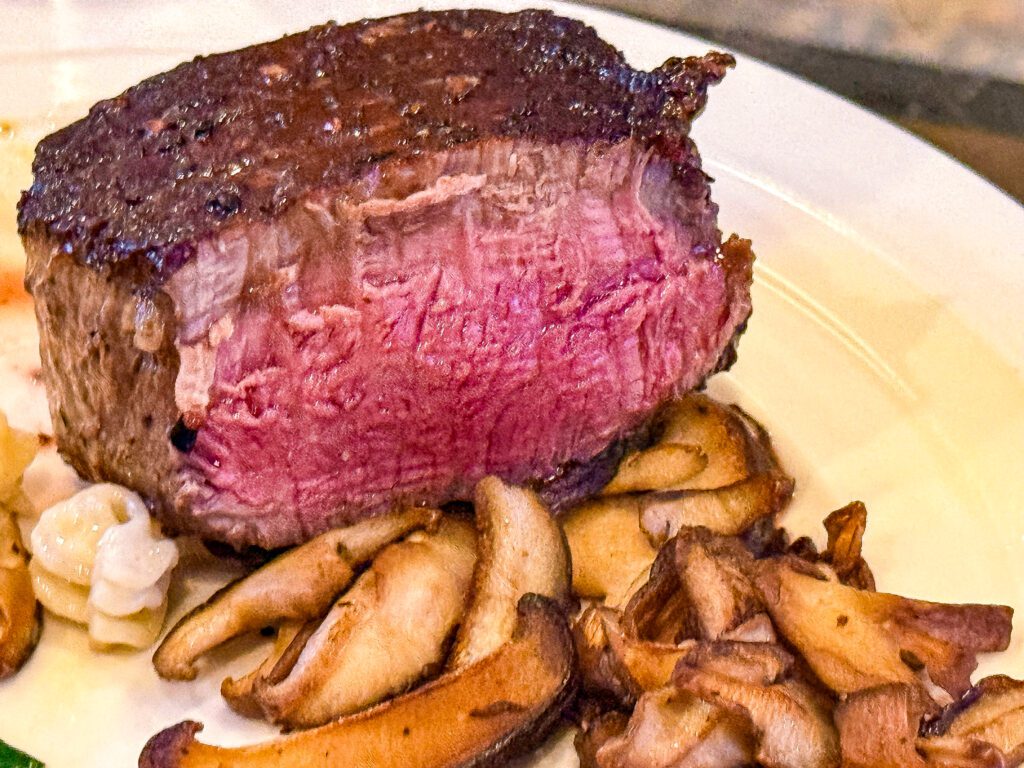
At this point you can use the drippings in the pan to make a sauce or glaze for the steaks or you can plate them up as they are-they will be delicious!
My go-to sides for filet mignon are masked potatoes, rice, halved sweet potatoes with brown sugar, sautéed mushrooms or wilted spinach with garlic. All are super easy and nutritious to add to your filet mignon dinner.
Filet Mignon in a Cast Iron Skillet
Equipment
- 1 cast iron skillet
- 1 digital meat thermometer
Ingredients
- 2 8 oz beef tenderloin filets
- 2 tbsp olive oil extra virgin
- 1 sprig fresh rosemary
- 3 tbsp butter clarified or ghee
- 2 tbsp Montreal Steak Seasoning or salt and pepper
Instructions
- Let your steaks come to room temperature for 1 hour. Season with Montreal Steak Seasoning or salt and pepper.
- Preheat oven to 400°F.
- Heat cast iron skillet over high heat and start overhead range hood to begin ventilation process.
- Once pan is smoking hot, swirl olive oil over surface.
- Sear filet in skillet, seasoned side down for 4 minutes.
- Flip steak and sear for another 4 minutes.
- Turn off heat and test temperature. It should be about 100°. If less, you might need to add more time finishing in the oven. If more, you might not need much time at all in the oven.
- Add pats of butter and rosemary sprig to pan between the steaks and spoon melted butter over the filets.
- Using oven mitts, carefully move the entire skillet into the oven and set a timer for 4 minutes.
- Bluetooth digital thermometers with preset alarms work great, but you can check periodically to see what the filets' temperatures are. Remove at 115°F for rare, 120° for medium rare. They will continue to cook after removing!
- Spoon the melted butter herb drippings over the steak and let it rest on a plate for a few minutes before serving.
Notes
Cast Iron Skillet Clean Up
As I said earlier, cast iron skillets need to be cared for in a specific manner to maintain their high performing qualities.
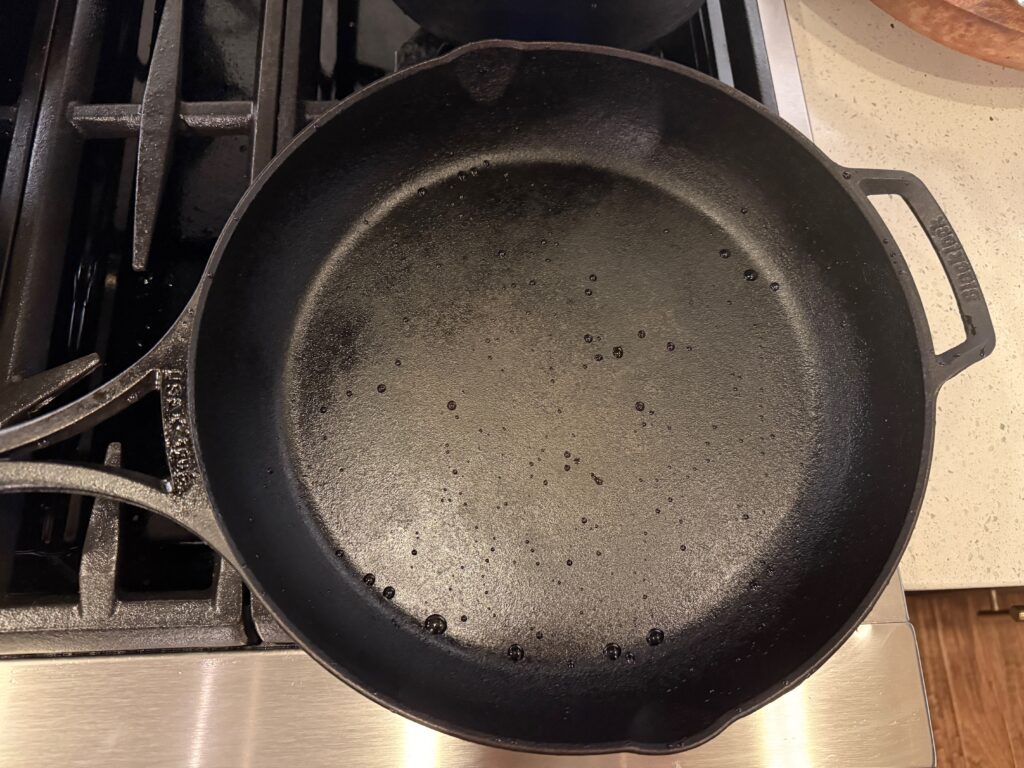
When I’m done cooking and the skillet has cooled, I wipe mine out with a few paper towels. Then I rinse it with plain hot water in the sink. Next I will use a Dobie scrubby sponge, the kind with the mesh covering, and lightly scrub it without soap.
Next I move it back to the stove top burner and turn the flame up to medium/high to dry it completely. Water=rust=bad!
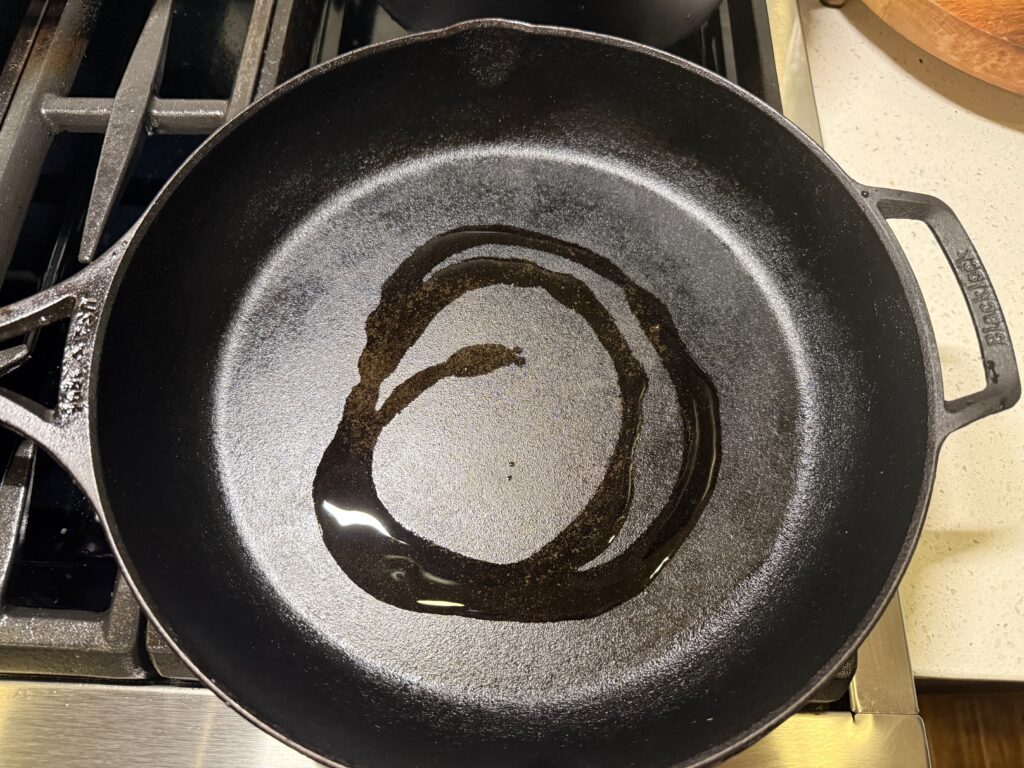
Here’s the important part: once it is dry and warm, drizzle some olive oil or vegetable oil into the skillet and swipe it around with a handful of paper towels. Let it heat for a couple of minutes and then turn it off.
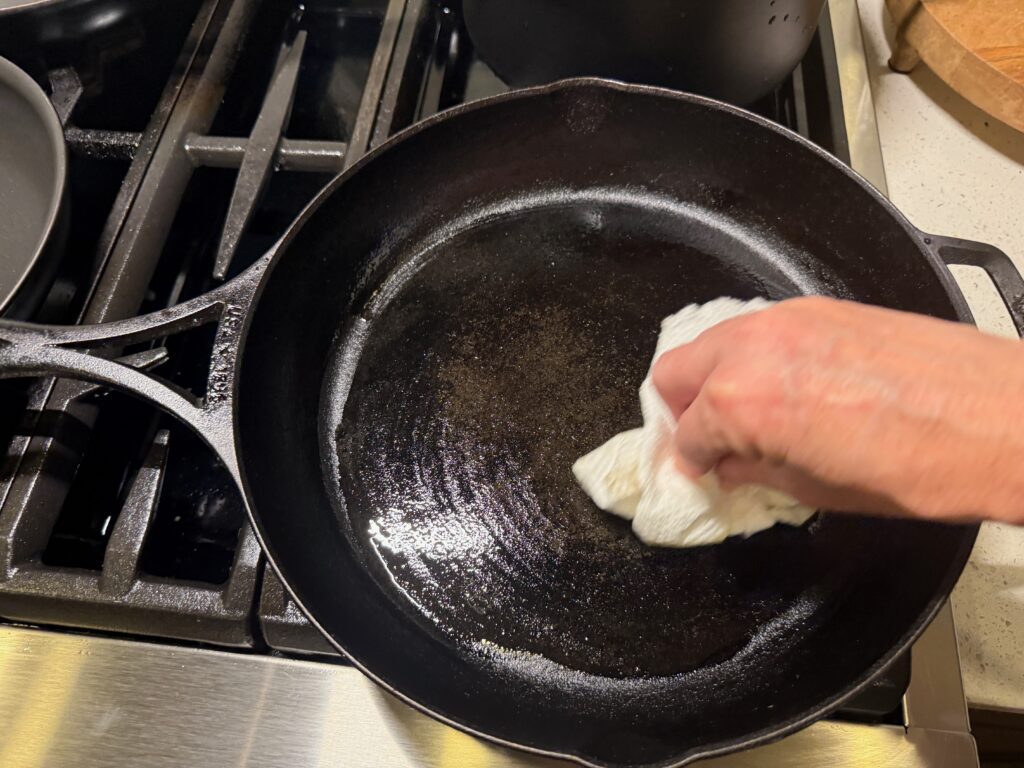
Carefully wipe off any remaining oil and let it cool.
I hope your filet mignon turns out beautifully and tastes like you’re in an elegant restaurant! Drop a comment and let me know what you think!
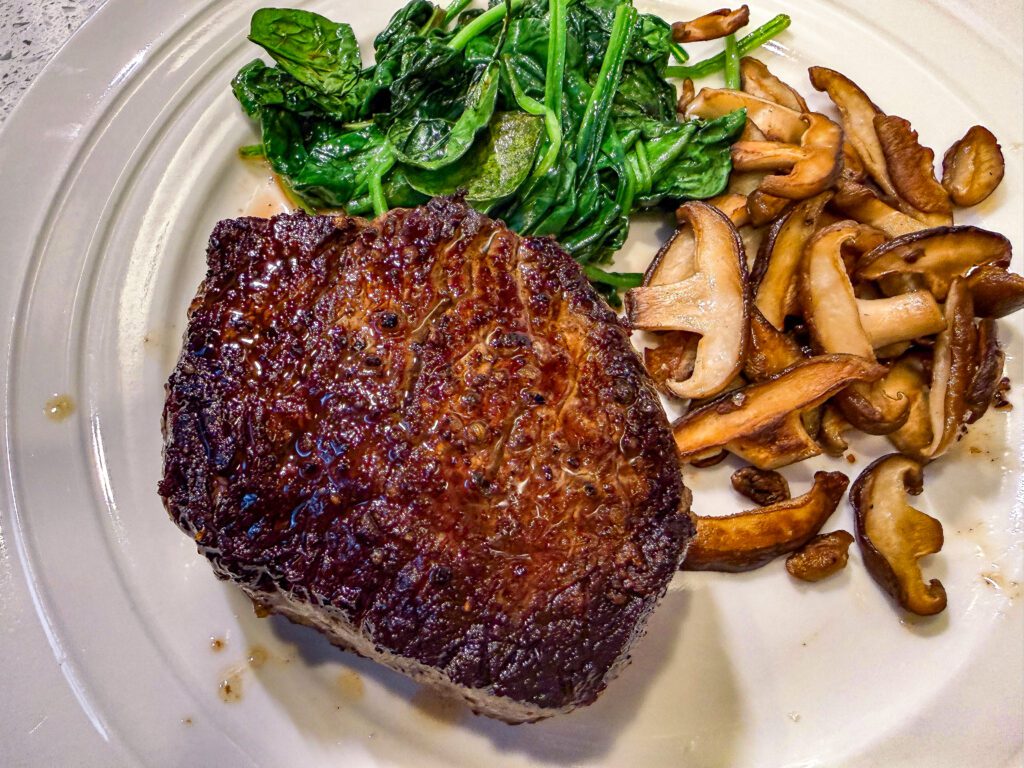
Interested in cooking more meals with homegrown ingredients? Read From Garden to Table: Homemade Recipes Using Fresh Herbs, Fruits, and Vegetables.