How to Grow, Harvest and Cook with Fresh Thyme
Grab your clippers because today we are cooking with fresh thyme from the herb garden and making breakfast, lunch and dinner!

Few herbs are as hardworking and foolproof as thyme. With its fragrant, tiny leaves and resilience in almost any garden space, thyme fresh from the garden quickly becomes a favorite for both beginners and seasoned gardeners.
Whether you’re crafting an herb garden on a balcony or planting borders in a raised bed, thyme offers beauty, versatility, and abundant culinary use. Here’s how to grow it successfully and how to bring its flavor into your kitchen.

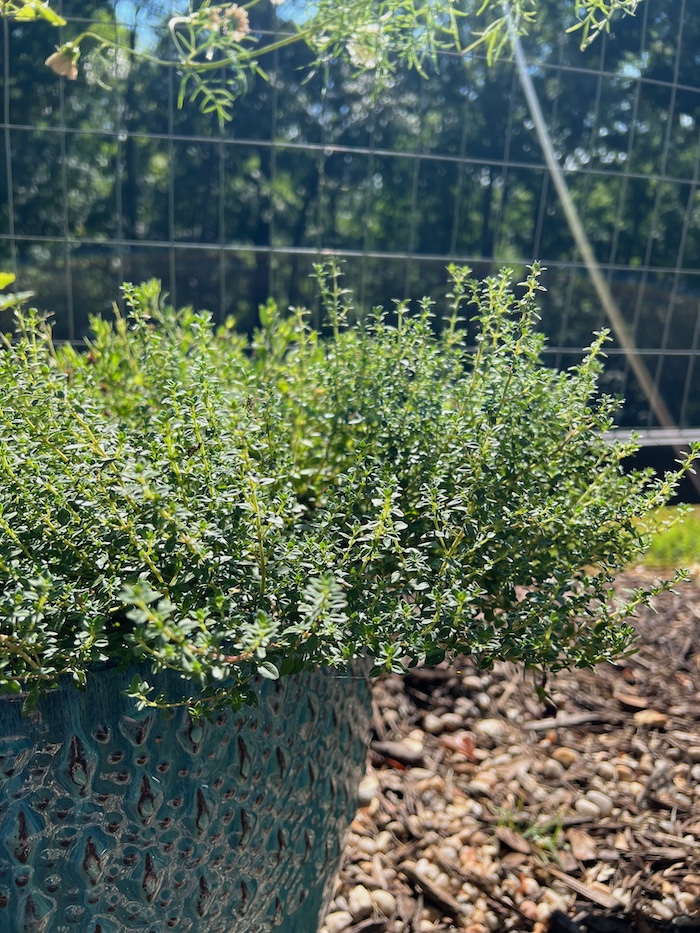
I find that thyme is one of my most reliable herbs in the garden. Its Mediterranean origin means thyme is a sun loving, drought tolerant, container friendly plant that always manages to survive some of my neglect.
Ginger with Roots Tip!
Rosemary and lavender make good companion plants because they have similar requirements.
For culinary purposes, I like to have both English Thyme and Lemon Thyme in my herb garden. English thyme is a classic herb for numerous recipes. The subtle hint of citrus in Lemon Thyme is perfect for seafood and poultry dishes.
If you are searching for a starter plant, consider Lively Root’s Thyme.
How to Grow Fresh Thyme
Fresh thyme from the kitchen garden is probably my favorite herb. I always snag a leaf or two on my morning garden stroll for a quick sniff-aaahhhh so good!
Soil and Planting Tips
- Use sandy or loamy soil with excellent drainage.
- Avoid heavy, wet soil—thyme dislikes soggy roots.
- Space plants 12 to 18 inches apart to allow room to spread.
- For containers, choose a pot with good drainage and a gritty potting mix.
Caring for Thyme
- Water deeply but infrequently; let the soil dry between waterings.
- Prune lightly throughout the season to encourage fresh growth.
- Replace plants every 3–4 years if they become woody or sparse.
How to Prepare Fresh Thyme for Use
- Use clean clippers or scissors to snip stems, cutting just above a leaf node.
- For small meals, cut a few stems at a time.
- For large harvests, take up to ⅓ of the plant—but never more, so the plant stays healthy.
Regular harvesting keeps thyme bushy and prevents it from becoming too woody.
How to Store Fresh Thyme
- Rinse and dry thyme cuttings
- Wrap in a damp paper towel and place in crisper drawer of fridge
- Place stems in small jar of water like flowers in a vase
- Strip leaves and dry in a dehydrator
Can You Use the Stems?
Yes! If the stems of your fresh cut thyme sprigs are soft and tender, chop them up with the leaves. If they are woody, do not use them.
However, I do find that thyme with woody stems are good for soups and stews that require you to remove them at the end of cooking.
Ginger with Roots Tip!
Hold a thyme sprig in one hand and use your fingers from your other hand to strip the leaves backwards along the stem. Go against the growth to remove them more easily.
Ready for some recipes that use fresh thyme from the herb garden? We’re making breakfast, lunch and dinner! Thyme to cook!

Breakfast Recipe: Savory Egg Cups
My first recipe that uses fresh thyme from the herb garden is Savory Egg Cups. This elegant and satisfying meal is perfect for company or a special brunch. It is absolutely delicious!

Lunch Recipe: Chicken Panini with Apple, Cheddar and Thyme
Moving on to lunch, we are making a Chicken Panini with Apple, Cheddar and Thyme. This sandwich is so warm and hearty that it serves as a great dinner option as well.

Dinner Recipe: Roasted Chicken with Lemon and Thyme
This roasted chicken dinner is a family favorite! The citrus and garlic herb butter creates a golden crispy skin and tender juicy meat. It is delish!

Fresh thyme from the herb garden is easy to grow and easy to use in recipes.
Growing thyme is one of the most rewarding choices you can make in your herb garden. It’s easy to care for, drought-tolerant, and provides endless culinary inspiration. Once you experience how fresh thyme elevates even the simplest meals, you’ll want it within arm’s reach all year long.
Ready for some more herb garden ideas? Read about growing basil in my post: Homemade Basil Pesto.

Looking for a starting point to homegrown living? Read The Homegrown Gardener’s Guide: Growing, Cooking and Living with the Seasons.