Garden to Table: Classic Oven-Roasted Acorn Squash Halves
Oven-roasted acorn squash halves are a classic family favorite that we love to put on the table in the fall.
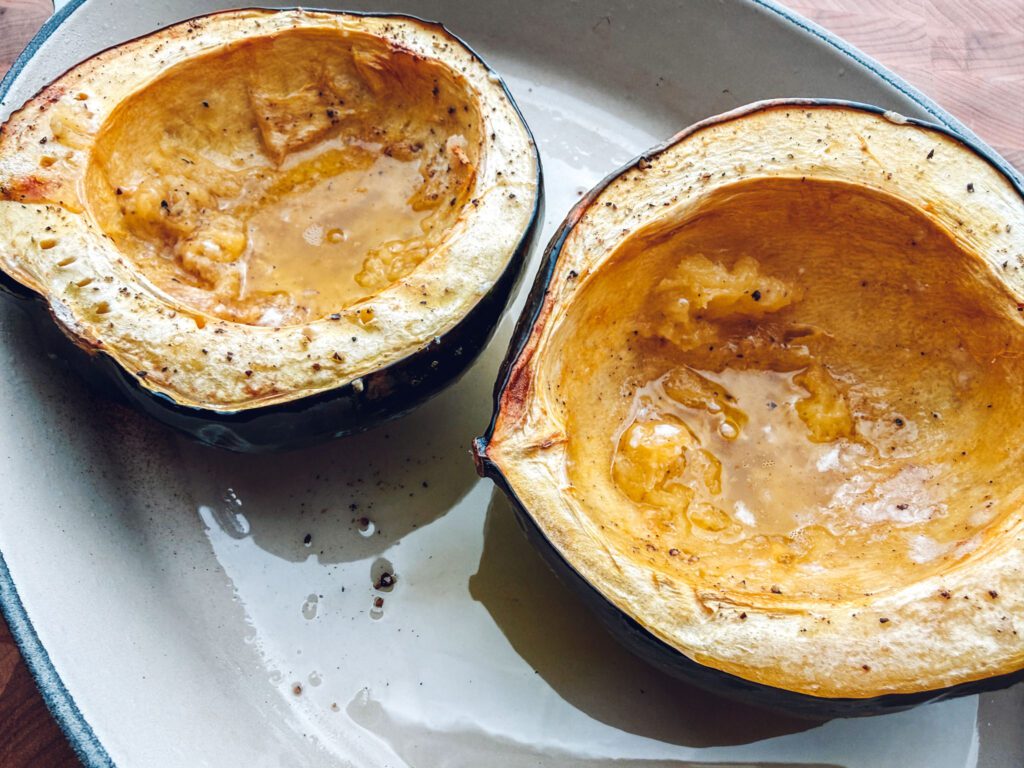
If you like classic oven-roasted acorn squash, you’re going to love growing and harvesting your own squash for this recipe!
How to Grow Acorn Squash
Also known as winter squash, acorn squash is easy to grow from seed. If you’re late to the season (don’t worry-it happens to the best of us), grab a starter plant at the local nursery.
I like Table King Acorn Squash from Botanical Interests if you’re searching for seeds. They provide excellent resource guides and have good varieties.
Choose a nutrient rich area to plant acorn squash that receives 6-8 hours of sunlight AND has room to grow. I planted mine in a raised bed and let it trail around the pebbled walkway.
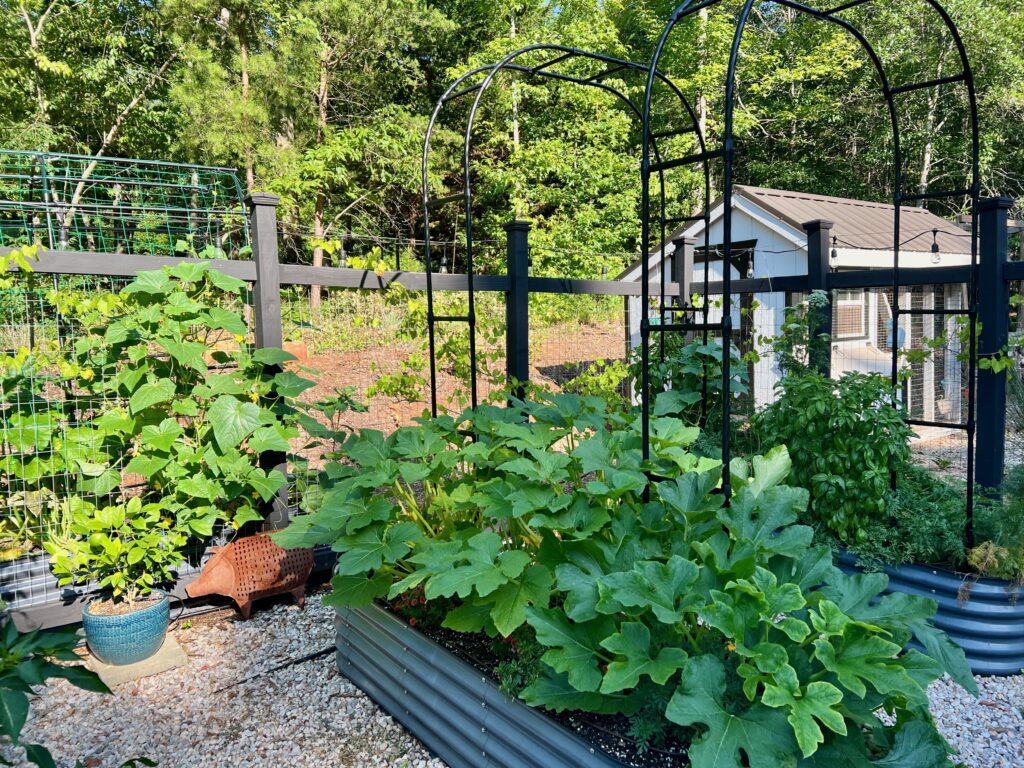
Here in South Carolina, our scorching hot summers are a little rough on these guys. Mine appreciated some afternoon shade and plenty of water through drip irrigation.
You can read how I added drip irrigation to my raised beds in my post Easy Step by Step Drip Irrigation for Raised Beds.
Some gardeners will use a trellis or cattle wire panel arch to train the vines. You might need to provide support for the fruit if you do this method.
- After all danger of frost has passed, plant seeds according to your seed package instructions.
- Water early in the morning and avoid wetting leaves to prevent powdery mildew.
- Use a slow release fertilizer with phosphorous.
- Use Bt spray/injection once plants are large enough to prevent vine borers.
- Check for pests and mildew often. (Keep neem oil on hand if needed).
- Harvest acorn squash when they are firm and dark green with brownish stems. Use a sharp clean pair of clippers to cut the stem.

Once you have your acorn squash, it’s time to start cooking! I’m sharing a classic oven-roasted acorn squash recipe that is easily tweaked with different ingredients.
Preparing the Acorn Squash for Roasting
While your oven is heating up to 400°F, prepare a small roasting pan or glass dish with a little oil or parchment paper. If you are cooking several halves at a time, use a jelly roll pan with parchment paper or silicone baking mat.
Cutting the Acorn Squash
The most difficult part about oven-roasted acorn squash is cutting it in half! The skin is tough and the shape is wobbly. My advice is to use a very sharp chef’s knife. Dull knives are more dangerous than sharp ones.
Insert the tip of the knife in one of the ‘grooves’ midway and slice down towards the stem or bottom. Turn and slice the opposite direction. Flip and repeat on the other side.
Or you can try the microwave method! Pierce a small hole in the squash and then microwave for 2-3 minutes to slightly soften it. It’s much easier to cut after it’s heated up a little.
Be careful and go slowly regardless of your cutting strategy!
Scooping out the Insides
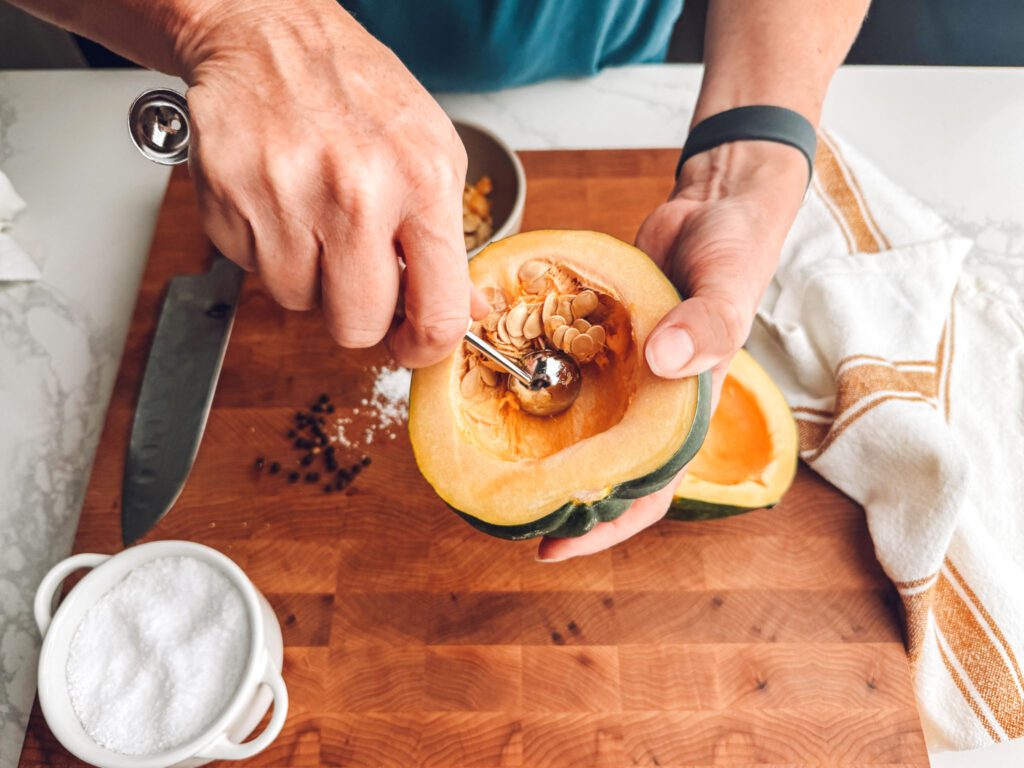
Similar to a pumpkin, the acorn squash will have a stringy seed filled center. Scoop this flesh out and use the ‘bowl’ in the center to hold your ingredients.
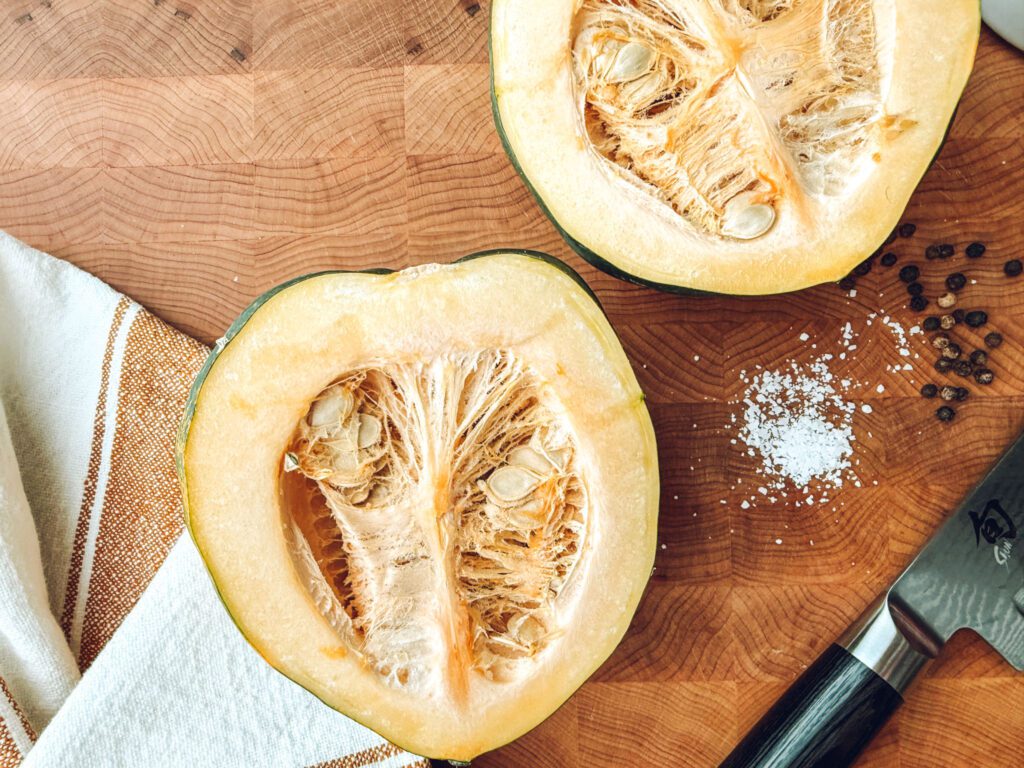
I find that a spoon works fine to scoop out the center, but a melon baller scoop works even better if you have one!
Ginger with Roots Tip!
Save some of the seeds for next year’s growing season! Rinse, spread in a single layer on paper towels, and let them dry completely. If they snap in half, they’re ready to store.
Seasoning Acorn Squash
For classic oven-roasted acorn squash, drizzle the flesh lightly with olive oil. Sprinkle with salt and pepper. Add a pat of butter to the center. It’s that easy!
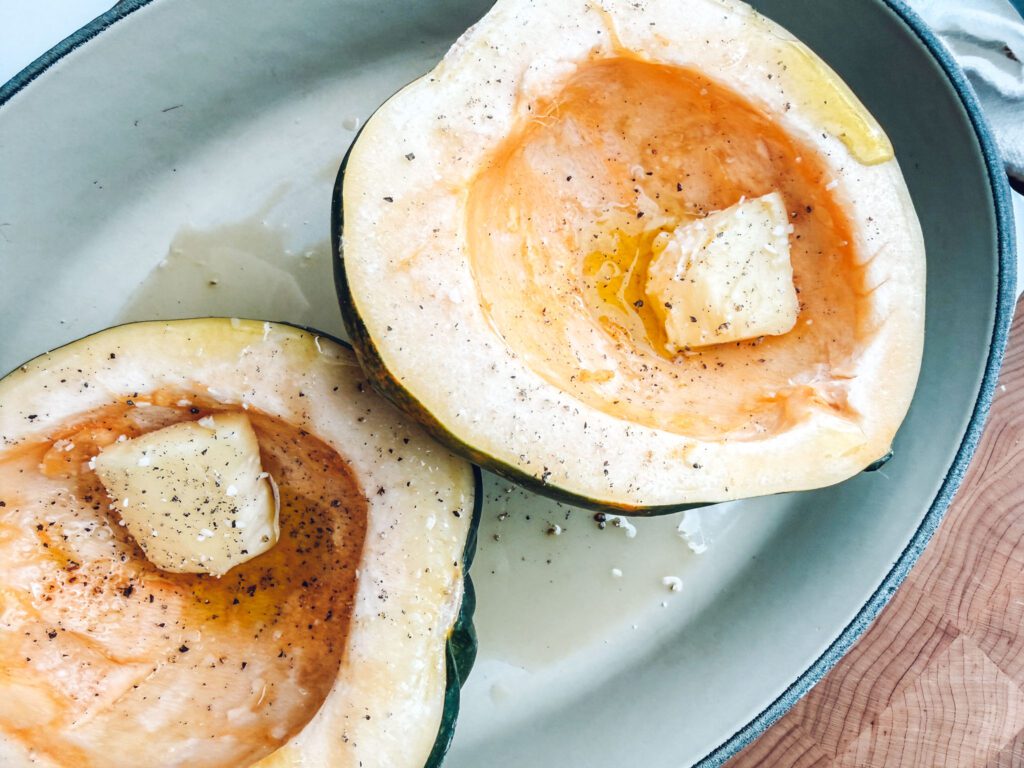
If you want to try some other options to dress up your acorn squash, consider the following ingredients:
- maple syrup
- honey
- fresh thyme
- brown sugar
- chopped rosemary
- chopped sage
- cumin
- parmesan cheese
- panko crumbs
- dried cranberries
Roasting your Acorn Squash
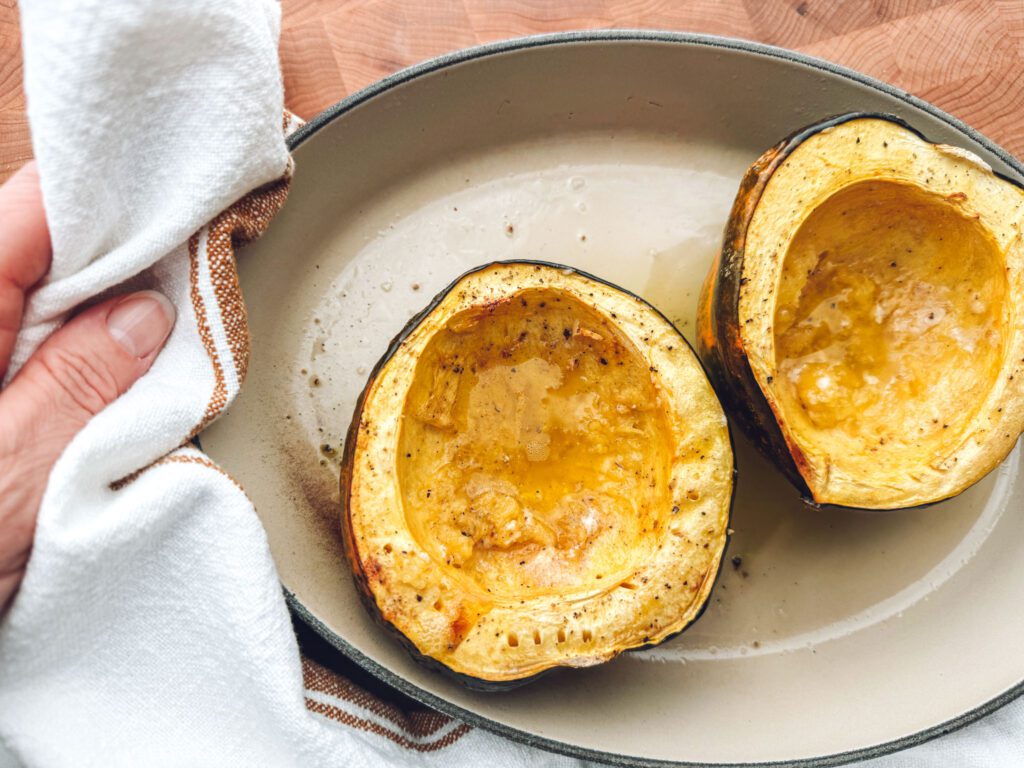
Some people like to cook their squash flesh side down to get that nice caramelized finish, but I prefer to roast them flesh side up.
Remember the bowl in the center of the flesh? It holds the melted butter and seasonings while they gently meld into the squash. So yummy! I find the high temperature will brown the edges nicely anyway.
Roast your squash at 400°F for 40-50 minutes (longer if they’re really big).
Halfway through the cooking time, spoon some of the melted butter over the sides.
Remove the squash from the oven once it is completely cooked and tender when pierced with a fork. These are going to be hot for sure, so let them cool a bit before serving.
Enjoy your classic oven-roasted acorn squash with chicken, pork, salmon and alongside whole grain dishes like quinoa.

Classic Oven-Roasted Acorn Squash
Ingredients
- 1 acorn squash halved
- 3 tablespoons olive oil
- 2 teaspoons salt
- 1 teaspoon pepper freshly ground
- 2 tablespoons butter
Instructions
- Preheat oven to 400°F.
- Lightly oil roasting dish with 1 tablespoon of olive oil.
- Place squash in dish, flesh side up. Rub with remaining olive oil.
- Season with salt and pepper.
- Place 1 tablespoon of butter in centers.
- Roast in oven for 40-50 minutes; spooning juices from center over flesh halfway through cooking time.
- Remove when acorn squash is extremely tender and edges are lightly caramelized.
If you’re building a kitchen garden with purpose, acorn squash is a rewarding crop that nourishes both body and rhythm—one slow-roasted bite at a time.
For more garden to table ideas, read The Homegrown Gardener’s Guide to Growing, Cooking and Living with the Seasons.