How to Make Vegetable Soup with Your Fall Harvest: A Simple Formula
From Fall Harvest to Soup Pot

When the temperatures finally break and the brisk autumn air returns, the garden tells you it’s time to make soup. The cool season vegetables are begging to be roasted, sautéed and puréed into autumnal goodness. Sweet potatoes, carrots, winter squash, onions, cauliflower and other fall veggies can become a warm satisfying soup without following a completely different recipe every time.
Once you understand my basic formula for how to make vegetable soup, you can use what you grow, what you find at the farmer’s market, or simply what needs to be used in the refrigerator and freezer.
In this guide, I’ll show you my basic fall harvest soup method and use Sweet Potato, Carrot and Thyme Soup as an example.
The Fall Harvest Soup Formula
Vegetables + Aromatics + Herbs + Broth + Blend + Finish = Soup
A Good Starting Point
The exact amount of broth will depend on the vegetables you’re using and how thick you like your soup. Start conservatively. You can always add more broth.
Ginger with Roots Tip!
Think of this as a formula rather than a strict recipe. Like making a sandwich…you can make all kinds of sandwiches without recipes, right? The goal here is to learn how to look at the vegetables you have and turn them into soup.

Step 1: Choose Your Fall Vegetables
Start with 4-6 cups of chopped vegetables.
Great choices include:
- Sweet potatoes
- Carrots
- Butternut squash
- Pumpkin
- Acorn or other winter squash
- Parsnips
- Potatoes
- Cauliflower
- Turnips
- Rutabaga
Ginger with Roots Tip!
Don’t worry about having exactly the right amount of one vegetable. Combining what you have is part of the beauty of harvest soup.
Step 2: Build Your Flavor Base
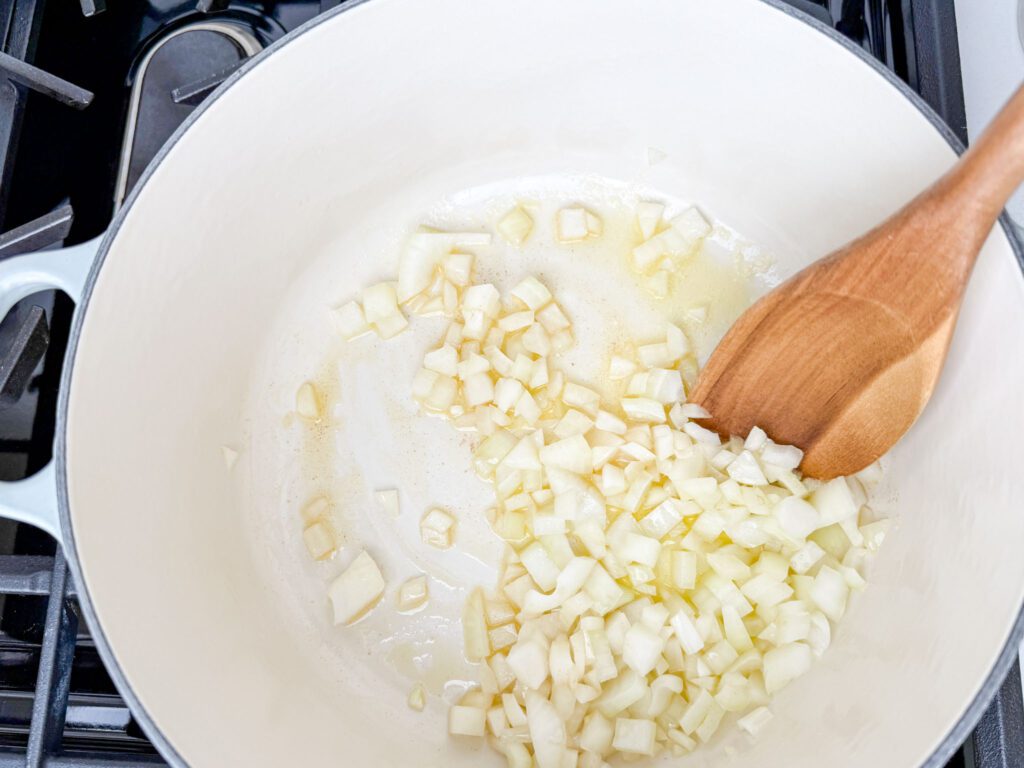
Begin by cooking aromatics in olive oil or butter.
A classic mirepoix is a combination of onion, carrot and celery cooked gently in fat to create the flavor foundation for soups and sauces.
But mirepoix isn’t your only option.
Try:
- Onion
- Onion + garlic
- Shallot + garlic
- Leeks
- Onion + celery
- Traditional onion + carrot + celery
Should I Sauté or Roast My Vegetables?
These are both good ways to build flavor.
Sauté
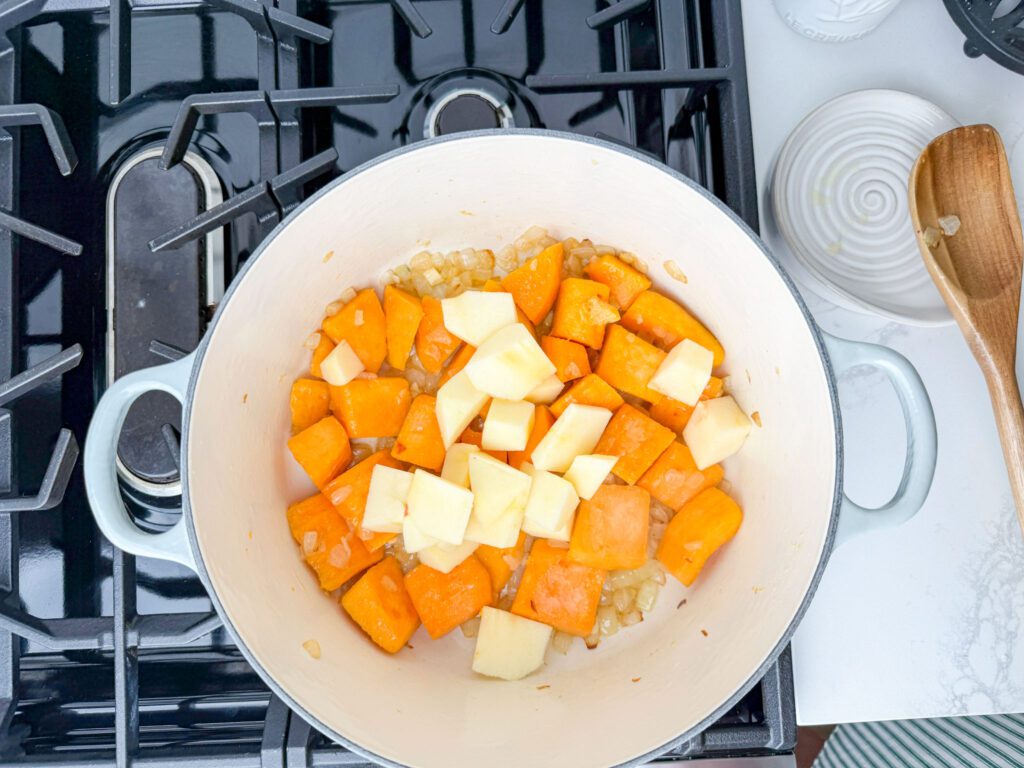
Sauté the aromatics and vegetables in your soup pot until they begin to soften and develop some color. I love my cast iron dutch oven from Le Creuset! It is a workhorse in my kitchen.
This is the easiest method for a one-pot soup. Chop and drop into the pot. The secret is to let them sauté long enough that they start to caramelize and leave some browning bits in the bottom of the pot.

Roast
Roast vegetables such as squash, carrots, sweet potatoes and onions until tender and caramelized, then transfer them to the soup pot.
Roasting takes a little longer but creates deeper, sweeter flavor. In this method, the vegetables are caramelized in the oven, not the pot.
Ginger with Roots Tip!
Sauté when you want an easy weeknight soup. Roast when you want deeper caramelized flavor.
Step 3: Add Fresh Herbs
Cool season vegetables pair especially well with herbs from the kitchen garden. Try adding:
- Thyme
- Sage
- Rosemary
- Parsley
- Cilantro
- Chives
Add sturdy or woody herbs like mature thyme, rosemary and sage during the cooking process. Save the more delicate herbs like parsley, cilantro and chives for finishing.
For the sample soup I’m making, fresh thyme balances the natural sweetness of the carrots and sweet potatoes.
Read my post How to Grow, Harvest and Cook with Fresh Thyme for more insight on this essential kitchen herb.
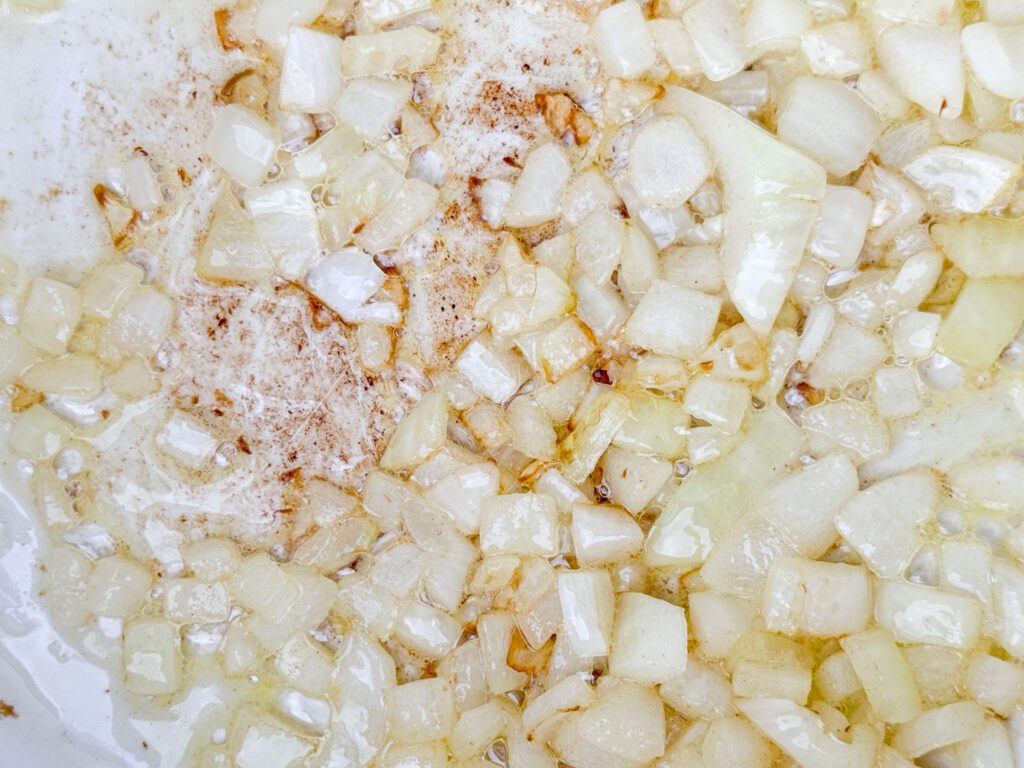
Step 4: Deglaze the Pot and Save the Fond
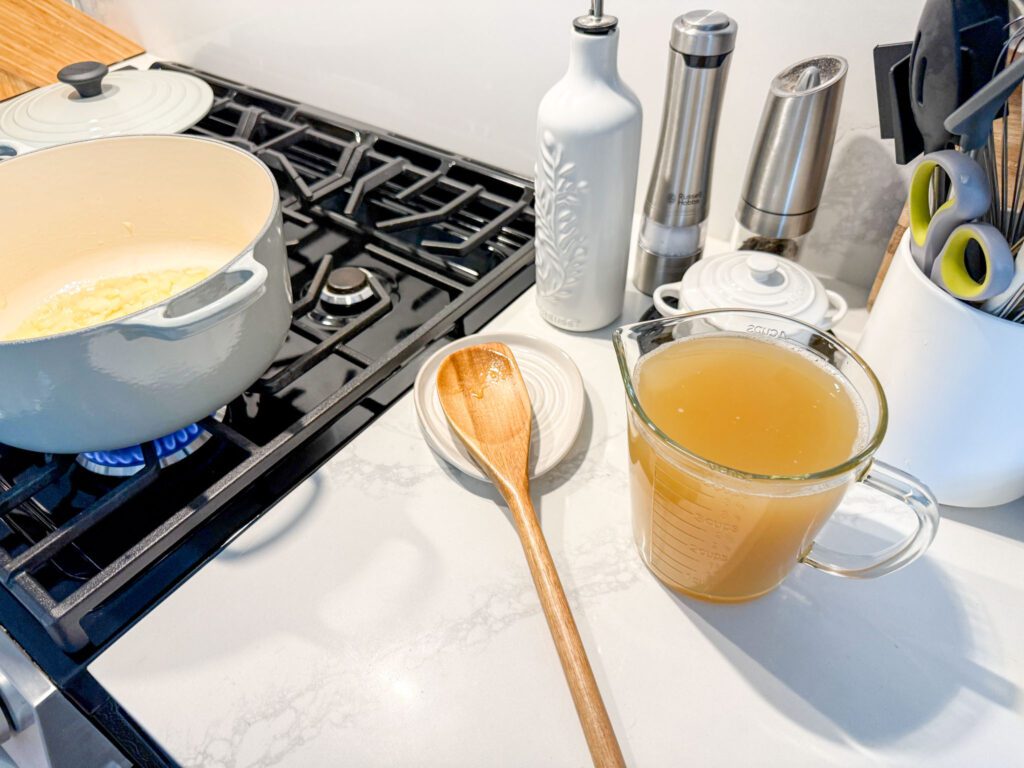
Once your vegetables have developed some color, add a splash of broth.
Use a wooden spoon to scrape the browned bits from the bottom of the pot.
Those browned bits are called fond, and they’re concentrated flavor. When I was teaching my youngest daughter how to cook, I told her this was the “gold” in the bottom of the pot or skillet. Never let it go to waste!
Work it back into the soup rather than leaving it behind.
Then add enough broth to mostly cover the vegetables.
Step 5: Simmer Until Completely Tender
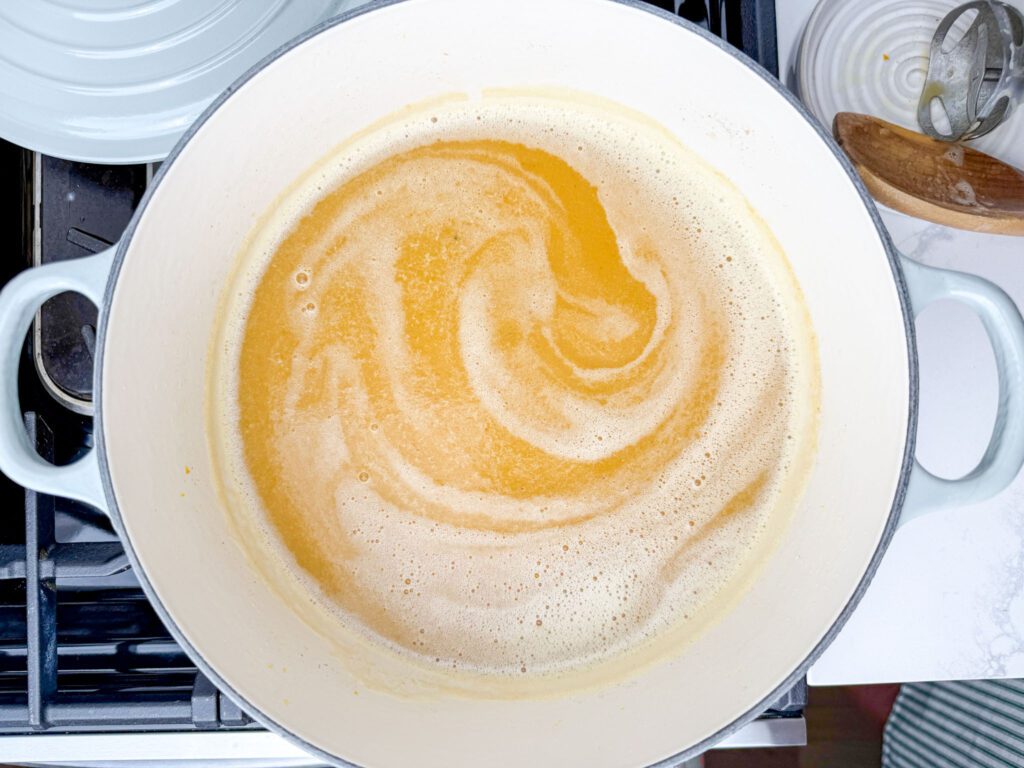
Bring the soup to a gentle boil, reduce the heat and simmer until the vegetables are very tender.
Depending on the vegetables and the size of your pieces, this will generally take about 15–25 minutes.
If you’re planning to purée the soup, the vegetables should be soft enough to easily mash with a fork.
Ginger with Roots Tip!
The smaller your vegetables chunks are, the faster they will cook.
Step 6: Blend and Adjust the Consistency
I prefer to use an immersion blender directly in the pot. If you don’t have one, carefully ladle small amounts into a blender or food processor to purée. Hot steam can build up and can make a disastrous mess if you aren’t careful-so take your time!
You can make your soup:
- Silky smooth
- Mostly smooth with a little texture
- Partially blended and rustic
Let the vegetables thicken the soup
For puréed harvest soups, you usually don’t need flour, cornstarch or another thickener.
Sweet potatoes, winter squash, pumpkin, potatoes, carrots and other vegetables naturally give the soup body once they’re blended.
If the soup is too thick: Add broth a little at a time.
If the soup is too thin: Simmer uncovered for several minutes to reduce it.
Ginger with Roots Tip!
Start with less broth than you think you’ll need-just cover the vegetables. It’s much easier to thin a soup than to thicken one.
Step 7: Taste Before You Finish
Before adding cream or toppings, taste your soup and ask yourself:
- Does it need salt?
- Does it need more pepper?
- Would a little acidity brighten it?
- Does it need more broth?
- Is there enough herb flavor?
If the soup tastes a little flat, try a small squeeze of lemon juice or a splash of apple cider vinegar before automatically adding more salt.
Step 8: Finish Your Soup
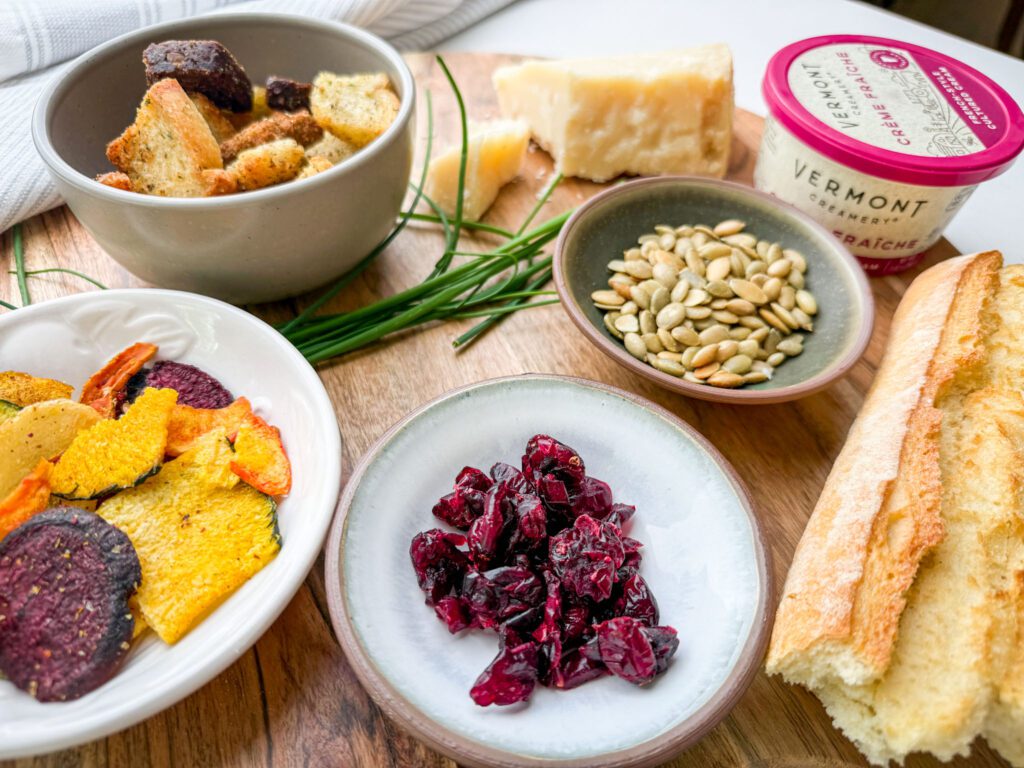
Finish the soup with some unique toppings. This is what allows one basic soup formula to go in completely different directions.
Simple Soup Finishes
- Extra-virgin olive oil
- Heavy cream or half-and-half
- Butter
- Freshly cracked pepper
- Fresh herbs
- Parmesan
- Homemade croutons
- Toasted pumpkin seeds
- Sour cream
- Plain Greek yogurt
- Squeeze of lemon
Gourmet Soup Finishes
- Crispy sage leaves
- Brown butter
- Chili-infused olive oil
- Maple-toasted pepitas
- Candied pecans
- Toasted hazelnuts
- Crème fraîche
- Herbed goat cheese
- Parmesan crisps
- Garlic-herb croutons
- Crispy shallots
- Roasted garlic oil
- Thin apple or pear matchsticks
- Herb oil
- Crispy prosciutto
- Microgreens
- Golden raisins
- Dried cranberries

An Easy Finishing Formula
For a special bowl, choose:
Something creamy + something crunchy + something fresh or flavorful
For example:
Cream + pepitas + fresh thyme
Crème fraîche + crispy sage + brown butter
Olive oil + croutons + parsley
You don’t need all three every time. A simple drizzle of good quality olive oil and freshly cracked pepper may be all a weeknight soup needs.
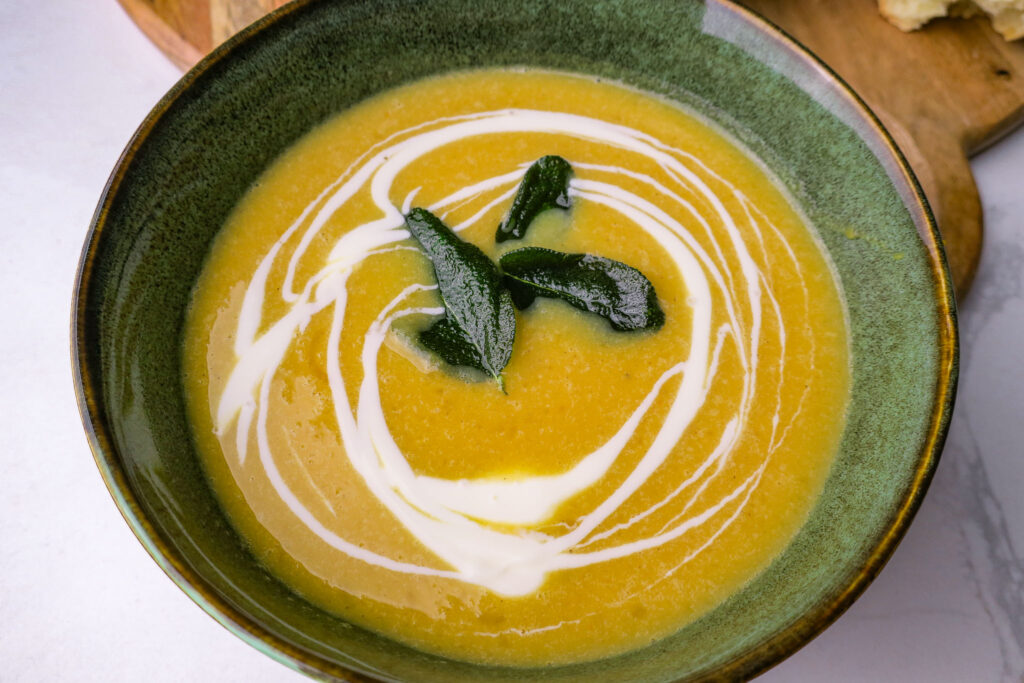

How to Make a Pretty Cream Swirl
You’ve probably seen that beautiful white swirl on bowls of creamy soup in restaurants. It’s surprisingly easy to make at home.
Mix:
- 2 tablespoons heavy cream
- 1 tablespoon sour cream, Greek yogurt or crème fraîche
Stir until smooth and pourable. If necessary, thin it with a few drops of cream or milk.
Transfer the mixture to a squeeze bottle, piping bag or small zip-top bag with the tiniest corner snipped off.
Drizzle a spiral over the soup.
For a decorative pattern, gently drag a toothpick or knife through the cream.
No squeeze bottle? Let the cream mixture slowly fall from the tip of a teaspoon while moving it over the bowl.
Add the swirl immediately before serving.
To show you how to make vegetable soup with my formula, I made a Sweet Potato, Carrot & Thyme soup.

Sweet Potato, Carrot & Thyme Soup
Let’s break down the process with this sample harvest soup together.
Ingredients:
- Olive oil and/or butter
- Onion
- Sweet potatoes
- Carrots
- Fresh thyme
- Chicken or vegetable broth
- Salt
- Freshly ground pepper
Optional:
- Heavy Cream or crème fraîche
- Olive oil
- Pepitas
- Fresh thyme for garnish
- Seasoned croutons
Sauté Method:
- Heat olive oil and/or butter in a soup pot.
- Sauté the onion until softened and lightly caramelized.
- Add chopped sweet potatoes and carrots.
- Continue cooking until the vegetables begin to develop a little color.
- Add fresh thyme.
- Pour in a small amount of broth and scrape the fond from the bottom of the pot.
- Add enough additional broth to mostly cover the vegetables.
- Bring to a gentle boil, reduce the heat and simmer until the vegetables are completely tender.
- Remove thyme sprigs.
- Blend with an immersion blender until smooth.
- Add more broth if needed to reach your preferred consistency.
- Taste and adjust the salt and pepper.
- Add a splash of cream if desired.
- Finish and serve.
Oven Roast Method:
- Heat oven to 425°F.
- Toss chopped vegetables with olive oil and seasonings.
- Layer vegetables evenly on sheet pan and roast for 25-30 minutes.
- Heat olive oil and/or butter in dutch oven on stove top.
- Add roasted sweet potatoes, carrots and onions.
- Add fresh thyme.
- Pour in a small amount of broth and scrape the fond from the bottom of the pot.
- Add enough additional broth to mostly cover the vegetables.
- Bring to a gentle boil, reduce the heat and simmer until the vegetables are completely tender.
- Remove thyme stems.
- Blend with an immersion blender until smooth.
- Add more broth if needed to reach your preferred consistency.
- Taste and adjust the salt and pepper.
- Add a splash of cream if desired.
- Finish and serve.
Everyday Finish
Olive oil + toasted pepitas + fresh thyme
A Little Fancier
Cream swirl + toasted pepitas + fresh thyme
Dinner Party Finish
Crème fraîche + crispy sage + maple-toasted pepitas
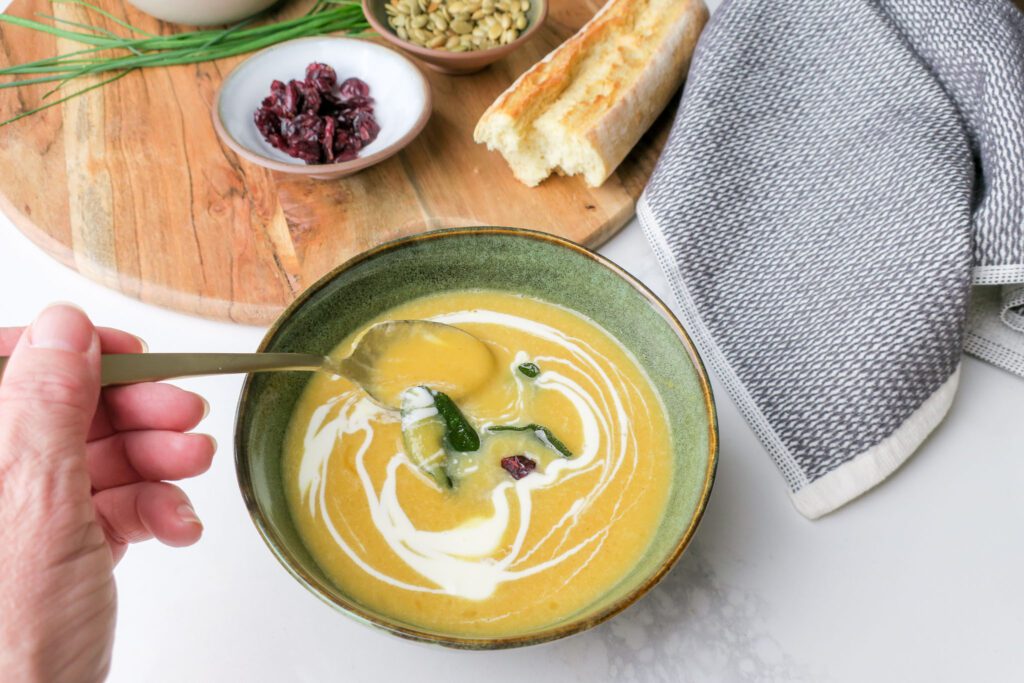
Create Your Own Fall Harvest Soup
Once you understand the method, you can stop thinking in terms of individual recipes.
- Choose the harvest: Pick 1-3 fall vegetables totaling roughly 4-6 cups.
- Build a flavor base: Choose onion, garlic, shallot, leek or mirepoix.
- Choose an herb: Sage, thyme, and rosemary are perfect for fall vegetables.
- Develop some color: Sauté or roast your vegetables to build flavor.
- Add broth and simmer: Use chicken or vegetable broth and cook until everything is tender.
- Blend: Make it silky smooth, slightly textured or rustic.
- Taste: Adjust salt, pepper, acidity and consistency.
- Make it Yours: Choose a simple finish for dinner tonight or dress it up for company.
Five Fall Harvest Combinations to Try
Butternut Squash + Apple + Sage
Finish with crème fraîche and crispy sage.
Pumpkin + Carrot + Rosemary
Finish with toasted pepitas and olive oil.
Cauliflower + Potato + Garlic
Finish with Parmesan, chives and homemade croutons.
Carrot + Parsnip + Thyme
Finish with Greek yogurt and toasted walnuts.
Sweet Potato + Butternut Squash + Sage
Finish with brown butter and maple-toasted pepitas.


FAQ’s
Do I need flour to thicken vegetable soup?
Usually not. Once puréed, the starch in many fall vegetables give soup a naturally thick and creamy texture. Sweet potatoes, winter squash and potatoes are good natural thickeners.
Do I need cream to make creamy vegetable soup?
No. “Creamy” can describe the texture rather than the ingredients. Thoroughly blended vegetables can produce a silky soup without any dairy at all.
Can I use frozen vegetables?
Yes. Frozen vegetables can work well in blended soups, although roasting fresh vegetables can provide additional caramelized flavor.
What if my soup is too thick?
Add broth a little at a time until you reach the consistency you like.
What if my soup is too thin?
Simmer it uncovered to allow some of the liquid to evaporate.

From the Garden to the Soup Pot
Learning a basic soup formula means you don’t need a new recipe every time you bring vegetables in from the garden.
Choose your harvest, build some flavor, add herbs and broth, simmer until tender, blend and taste. Then decide whether tonight’s bowl needs nothing more than a drizzle of olive oil or if it deserves the cream swirl, crispy sage and toasted pepitas.
Once you know the method, a basket of mismatched fall vegetables starts looking a lot more like dinner.
Looking for more soup ideas? Read 10 Soup Recipes for Fall, perfect for autumn.